Compiled by Ewa Historian John Bond
Shouldn’t Hawaii Citizens Be Prepared For War With China?


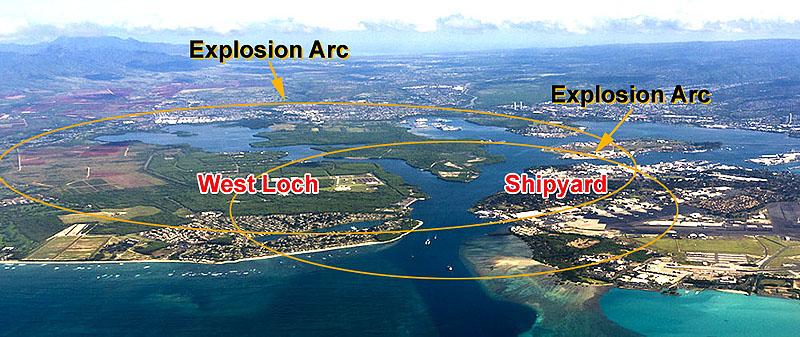
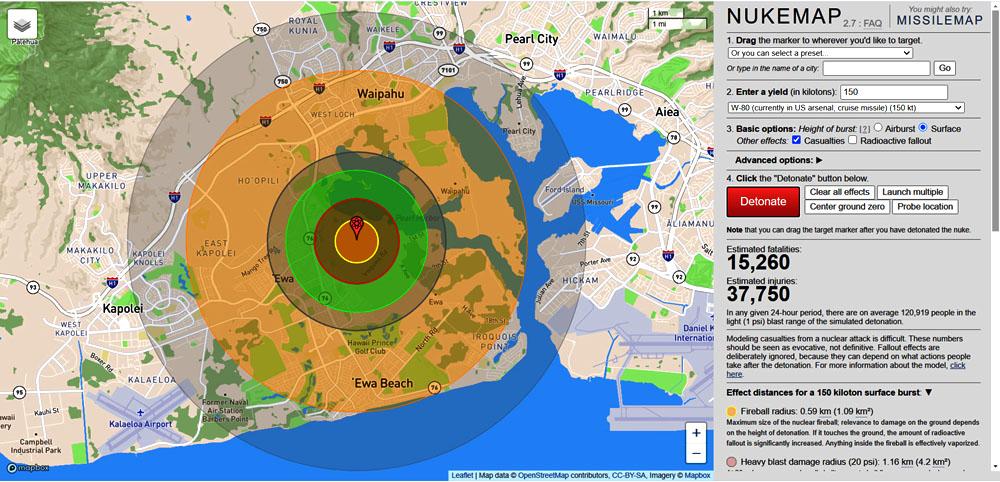
With the increasingly likelihood of a missile war with China projected for 2024 – 28, should Hawaii and especially the central target of Oahu being preparing for a nuclear missile war with China?
As a longtime historian of WW-II and especially the lead up to Japan attacking Pearl Harbor, I cannot but be amazed at the historic similarities that are happening today between the United States and China.
There are also similarities with the Cold War military buildups after the end of WW-II. First the Operation Crossroads tests in 1946 and then the huge number of tests in 1962 of every nuclear weapons systems in the US military inventories.
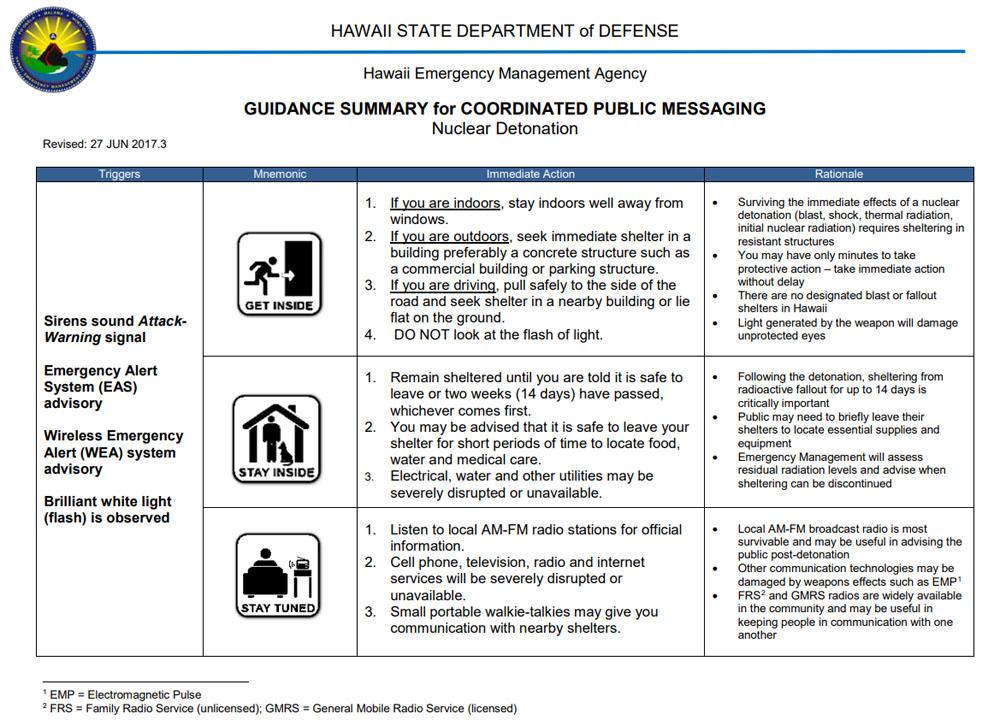

Missile War With China – Is Oahu Prepared? Does It Even Matter?

The Cold War Era Duck And Cover May No Longer Apply
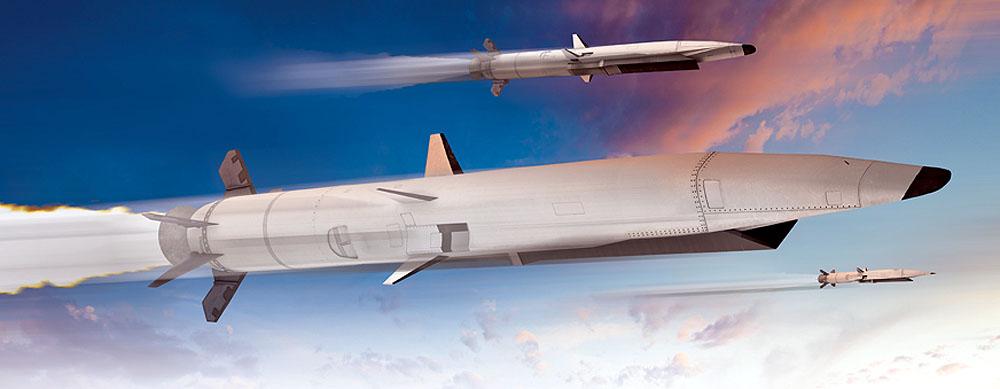
Advanced Hypersonic Missiles From China Launched At Oahu Would Provide 5 Minutes Or Less Public Warning

https://missilethreat.csis.org/missile/df-17/
China’s 10th Research Institute is responsible for developing the DF-17 and other Chinese HGVs. Also known as the “Near Space Flight Vehicle Research Institute,” the organization operates under the China Aerospace Science Industry Corporation (CASIC) 1st Academy. U.S. officials confirmed the DF-17’s existence in 2014, identifying it as the Wu-14. News media later identified the missile as the DF-ZF – likely an early Chinese designation. Between January 2014 and November 2017, China conducted at least nine flight tests of the DF-17. Tests took place at the Taiyuan Satellite Launch Centre in Shanxi Province.
China's 100-day push near Senkaku Islands comes at unsettling time for Sino-Japanese ties

For those whole follow current events the standard belief is that a war with China would start over Taiwan. However, it is even more possible it could start over the Senkaku islands – Ever Heard Of Them?
For Japan The Senkaku Islands Are A Very Big Deal And Worth Fighting For – With Treaties Bringing In The US To Defend Them

China has passed a new and unsettling milestone in the East China Sea, sending government vessels to waters near the Japan-administered Senkaku Islands for more than 100 straight days in what Tokyo has labeled a “relentless” campaign to take control of the disputed islets.
But more disconcerting for Tokyo than the milestone itself is the timing.
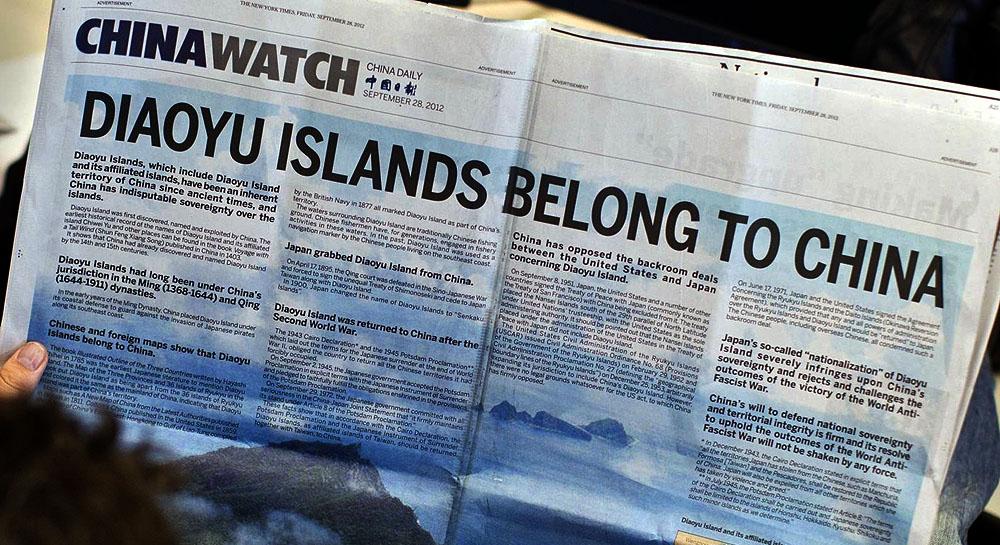
China calls the islands Diaoyu and say they belong to China, just like Taiwan
It comes at a precarious time for Sino-Japanese and Sino-U.S. ties. Washington is undergoing a radical shift in its policy toward Beijing, with Secretary of State Mike Pompeo using a speech Thursday to evoke images of a new Cold War and stating that the U.S. “can never go back to the status quo” in its dealings with China.
Japan, meanwhile, is being forced to rethink how it will approach an increasingly belligerent China after years of work by the administration of Prime Minister Shinzo Abe to repair Tokyo’s relationship with Beijing.
The Senkakus: 2010-2020
Sept. 7, 2010: A Chinese trawler collides with Japan Coast Guard vessels near the Senkaku Islands, resulting in the arrest of the Chinese captain. The incident prompts a major diplomatic row.
September 2012: The government announces it will buy three of the Senkaku islets from a private Japanese owner. In response, China sends government vessels into the surrounding waters to assert its claims as the largest anti-Japanese protests since Beijing and Tokyo normalized ties in 1972 erupt across China.
Nov. 23, 2013: China unilaterally establishes an air defense identification zone over the East China Sea that includes the airspace over the Senkakus.

April 2014: U.S. President Barack Obama becomes the first American president to mention the Senkakus as covered under Article 5 of the U.S.-Japan security treaty.
Aug. 6, 2016: Some 230 China Coast Guard vessels and fishing boats are spotted swarming waters near the islets, an “unusually large number,” according to the Foreign Ministry.

April 2017: The Defense Ministry announces that Air Self-Defense Force fighters were scrambled 1,168 times, with 73 percent of them against Chinese aircraft, in fiscal 2016 — the largest number since 1958.
March 21, 2018: China transfers control of its coast guard from civilian oversight to the Central Military Commission, its top military body.
December 2019: Chinese government ships confirmed in the contiguous zone around the islands, just outside Japan’s territorial waters, surpass 1,000 for a new record.
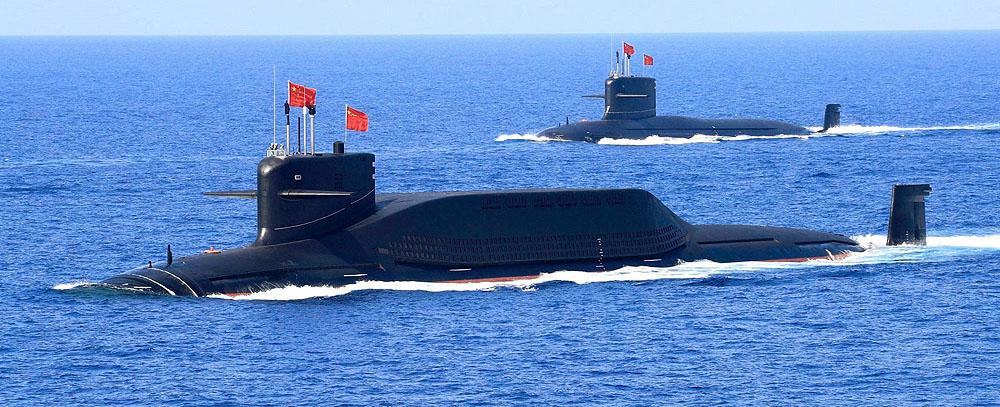
China READY FOR WAR: Taiwan sent explosive warning as army boast we are ready to go
https://www.youtube.com/watch?v=DIGAyzb0HHc
China has never shown interest in any arms control treaty.
Taiwan defence chief says no signs China is preparing for war
There are no signs that China is preparing for all-out war with Taiwan, such as massing troops along its eastern coast, Taiwan’s defence chief said on Tuesday, after repeated Chinese drills near the island that China claims as its own.
Democratic Taiwan has denounced China’s maneuvers, including flying fighter jets over the sensitive mid-line of the Taiwan Strait, as an attempt at intimidation.
“The Chinese communists have continued their acts of provocation against Taiwan, but there are currently no signs showing it is ready to launch a full-scale war,” Defense Minister Yen De-fa told parliament.
One sign of an imminent attack would be if troops from inland parts of China began massing along its east, but there are no indications that is happening, he added.
The Army and Navy’s Hypersonic Missile is a Go
Hypersonic missiles will be so fast that an inbound warning would be 5 minutes or less. US defense may rely upon Artificial Intelligence (AI) because human response will be too slow.
US missile defense response, POTUS authorization plans needs total review
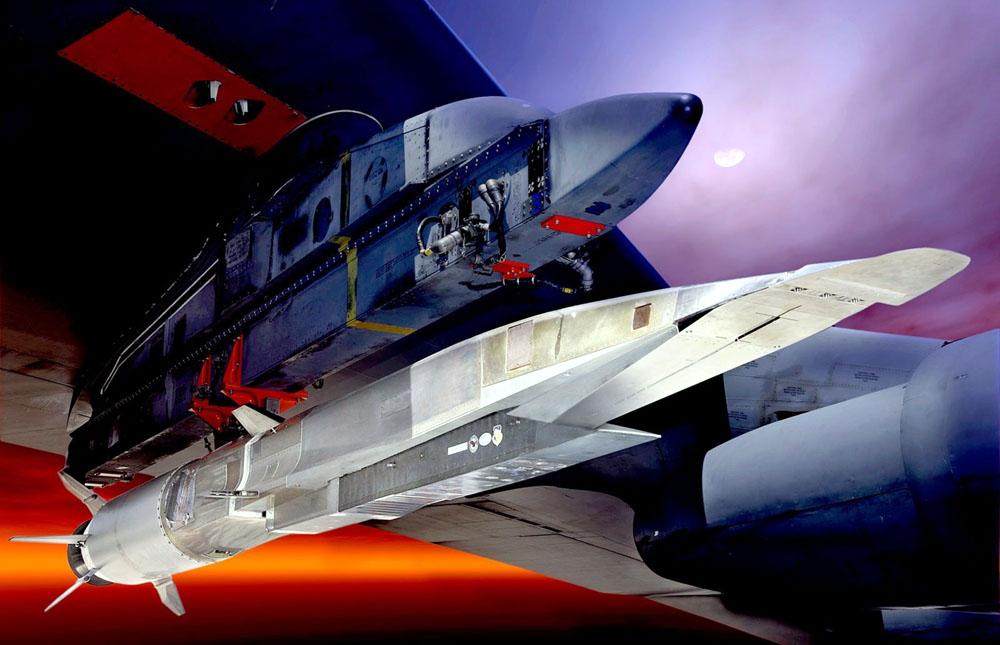
https://nationalinterest.org/blog/buzz/army-and-navy%E2%80%99s-hypersonic-missile-go-166359
By definition, hypersonic missiles fly in excess of Mach 5, or five times the speed of sound and are generally designed to be highly maneuverable. Glide bodies like the C-HGB, are unpowered, but reach terminal velocity under rocket power. Once at the proper speed and altitude, glide bodies separate from their rocket boosters and maneuver toward a target, similarly to hypersonic missiles. Thanks to both their blisteringly high speed and the evasive maneuvers they are capable of, defending against them is particularly difficult.
Hypersonic weapons are the next frontier of great power competition between the United States, Russia, and China. The Army and Navy want to expedite the development of the missile and hope to field it in 2023.

Speaking during an online webinar, Lieutenant General Neil Thurgood, director of Hypersonics, Directed Energy, Space, and Rapid Acquisition, said that the missile’s “flight test program is very aggressive, and we need to be aggressive in order to keep on case and be competitive with our near-peer competitors, namely Russia and China.”
Though the Navy is the lead designer for the C-HGB program, the Army is taking the lead in production. Both services will field the same C-HGB, individual launchers and weapon systems will be developed by each branch to address their specific needs. Commonality between the two branches’ Glide Bodies is expected to simplify manufacturing.

Beyond INF: An Affordable Arsenal Of Long-Range Missiles?
https://breakingdefense.com/2019/05/beyond-inf-an-affordable-arsenal-of-long-range-missiles/
With the landmark INF Treaty likely to expire in August, the US will be free to develop new long-range, land-based missiles to counter China’s — and by Pentagon standards, it could do so pretty cheaply, according to a new study from a highly regarded thinktank.
Converting the Navy’s Tomahawk cruise missile to launch from land would cost about $100 million, according to the Center for Strategic & Budgetary Assessments. After development, CSBA continued, each individual land-based Tomahawk missile would cost about $1.4 million for a variant that could only hit stationary targets like airbases or $2.5 million for one capable of tracking moving targets such as ships.
Weapons with longer ranges and more advanced stealth features to avoid being shot down would cost significantly more, of course. But even the most expensive option CSBA studied in its latest report — a hypersonic boost-glide weapon capable of hitting moving targets 4,000 miles away — would cost only $1.3 billion to develop and then $23 million per missile.
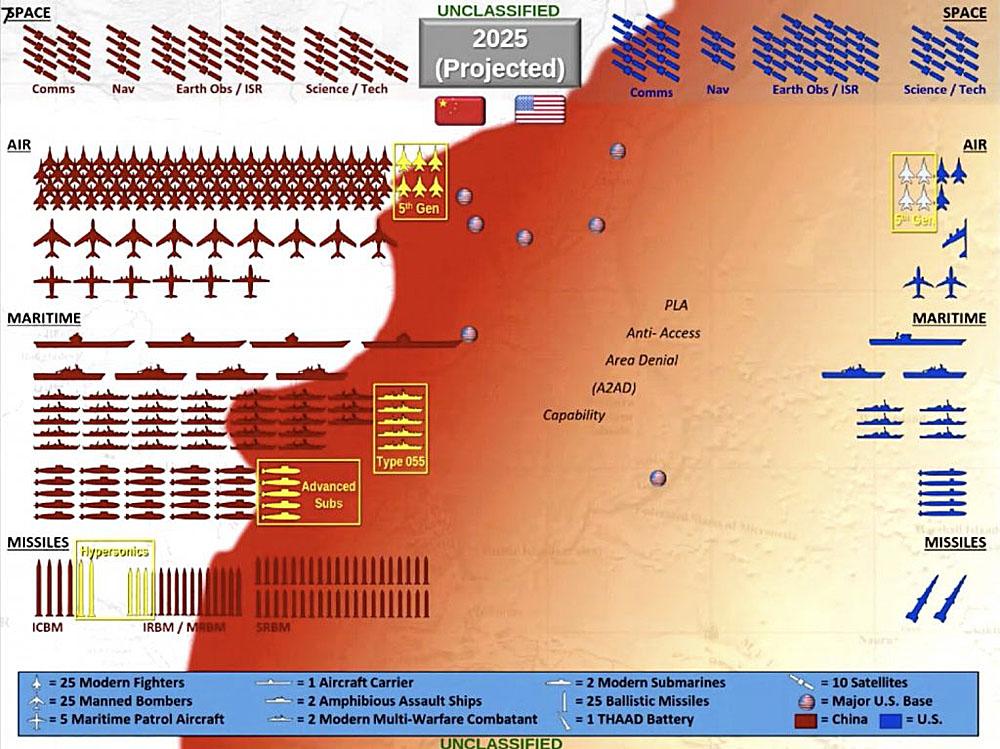
Red Storm Rising: INDO-PACOM China Military Projection
https://fas.org/category/china/
The INDO-PACOM briefing does not show that the United States has any ballistic missile submarines in the Pacific, even though eight U.S. Pacific-based SSBNs play a central role in targeting China. Just two of these Ohio-class SSBNs can carry more warheads than China has in its entire nuclear stockpile. This image shows the USS Pennsylvania (SSBN-735) during a port visit to Guam in 2016.
FAS: Apples, Oranges, and Cherry-Picking
https://fas.org/wp-content/uploads/2020/09/PACOM2020_NDU-WMD-Brief2020_Minihan070720.pdf
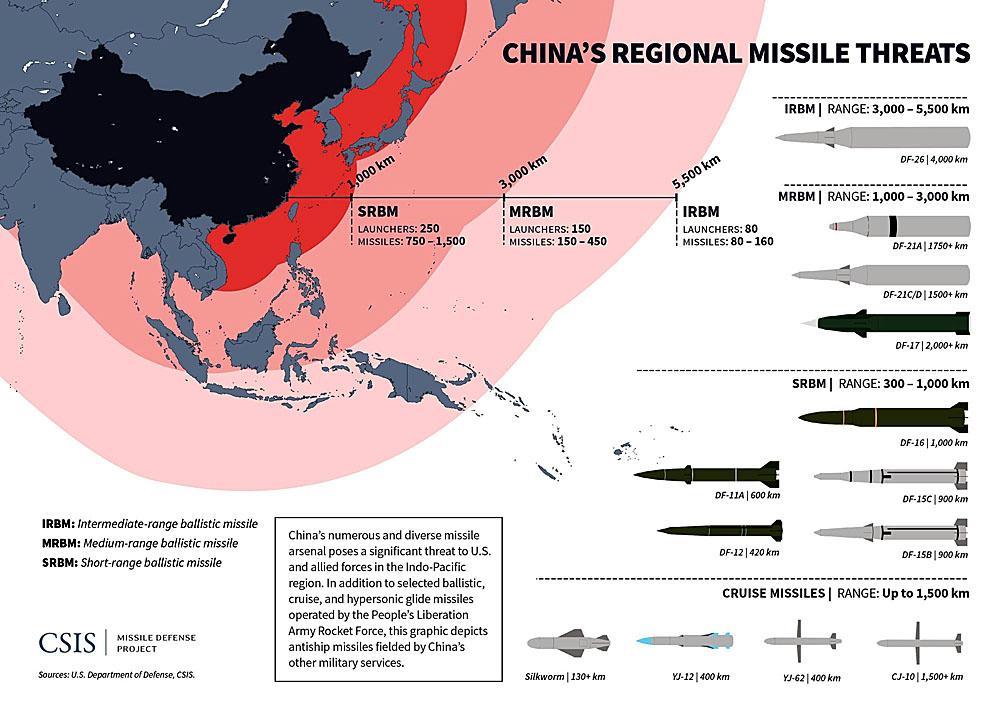
In describing this development, however, the INDO-PACOM briefing slides make the usual mistake of overselling the threat and under-characterizing the defenses. Moreover, some of the Chinese missile forces listed in the briefing differ significantly from those listed in the recent DOD report on Chinese military developments. As military competition and defense posturing intensify, expect to see more of these maps in the future.
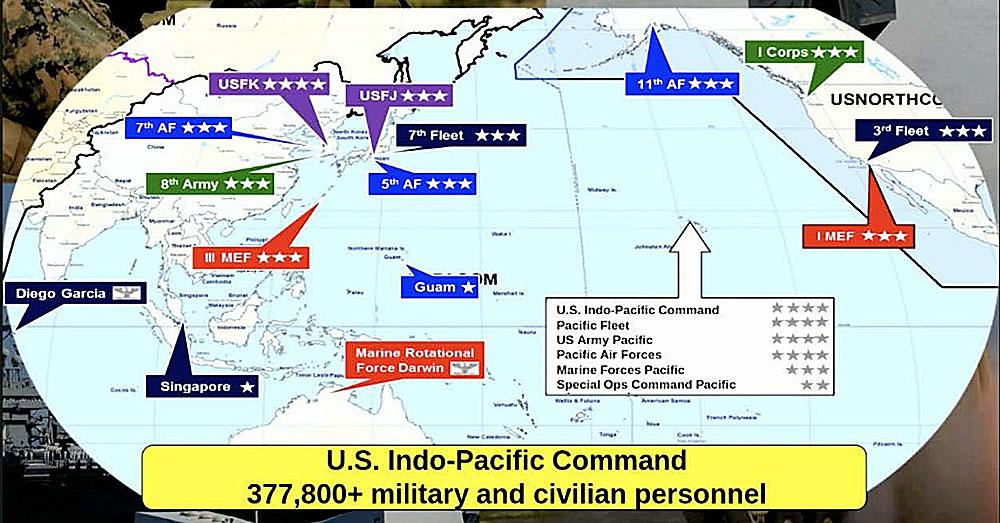
The INDO-PACOM maps suffer from the same lopsided comparison and cherry-picking that handicapped the 2018 Nuclear Posture Review: it overplays the Chinese capabilities and downplays the U.S. capabilities (see image below). While he briefing maps includes all of China’s military forces, whether they are postured toward India or Russia, it only shows a small portion of U.S. forces. INDO-PACOM mapmakers may argue that it’s only intended to show the force level in the Western Pacific theater, but INDO-PACOM spans all of the Pacific and the maps ignore other significant U.S. forces that are operating in the region to oppose China.
ICBMs: One of the most glaring omissions is that the maps do not show the United States has any ICBMs (the map also does not list U.S. SLBMs but nor does it list Chinese SLBMs). Although U.S. ICBMs are thought to be mainly assigned to targeting Russia and would have to overfly Russia to reach targets in China, that does not rule out they could be used to target China (Chinese ICBMs would also have to overfly Russia to target the continental United States). U.S. ICBMs carry more nuclear warheads than China has in its entire nuclear stockpile.
Inconsistent Missile Numbers
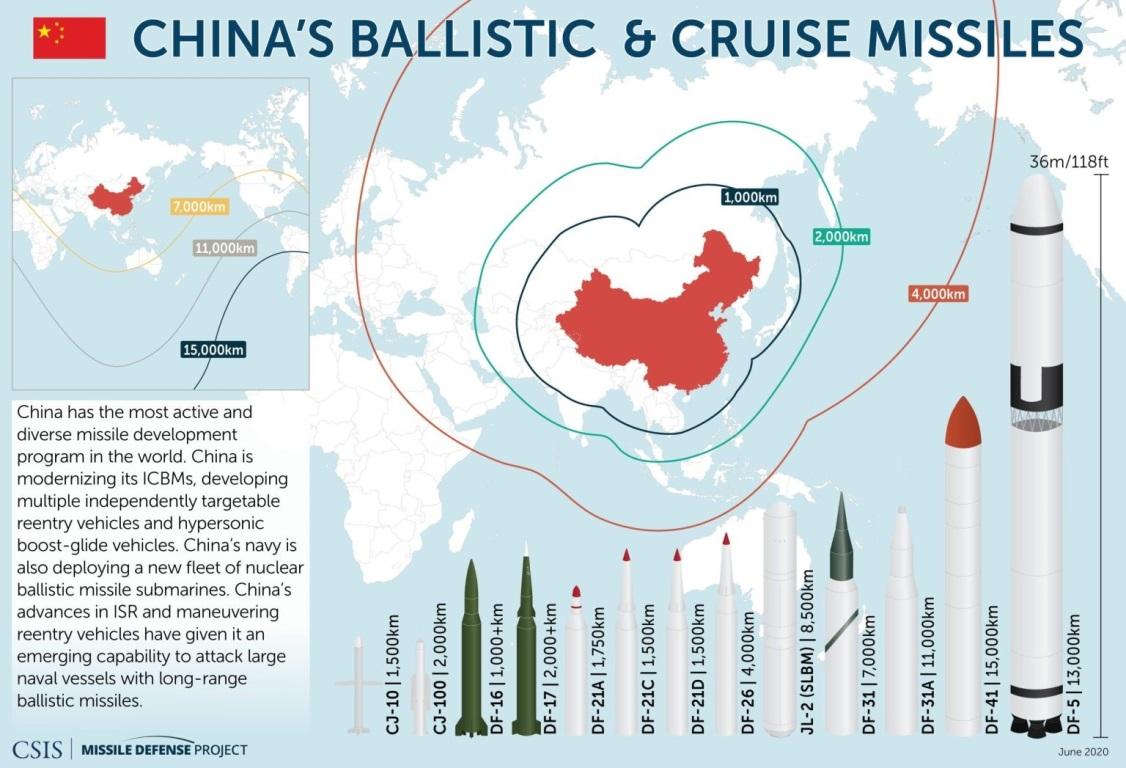
The INDO-PACOM maps are also interesting because the numbers for Chinese IRBMs and MRBMs are different than those presented in the 2020 DOD report on Chinese military developments. INDO-PACOM lists 250 IRBMs/MRBMs, more than 100 missiles fewer than the DOD estimate. China has fielded one IRBM (DF-26), a dual-capable missile that exists in two versions: one for land-attack (most DF-26s are of this version) and one for anti-ship attack. China operates four versions of the DF-21 MRBM: the nuclear DF-21A and DF-21E, the conventional land-attack DF-21C, and the conventional anti-ship DF-21D.
Conclusion and Recommendations
The INDO-PACOM maps project China’s military modernization will continue at a significant pace over the next five years with increases in delivery platforms and capabilities. This will reduce the military advantage the United States has enjoyed over China for decades and further stimulate modernization of U.S. and allied military forces in the region. As forces grow, operations increase, and rhetoric sharpens, insecurity and potential incidents will increase as well and demand new ways of reducing tension and risks.
Unfortunately, the INDO-PACOM briefing does a poor job in comparing Chinese and U.S. forces and suffers from the same flaw as the 2018 Nuclear Posture Review by cherry-picking and mischaracterizing force levels. It is tempting to think that this was done with the intent to play up the Chinese threat while downplaying U.S. capabilities to assist public messaging and defense funding. But the Chinese military modernization is important – as is finding the right response. Neither the public nor the Congress are served by twisted comparisons.
It would also help if the Pentagon and regional commands would coordinate and streamline their public projections for Chinese modernizations. Doing so would help prevent misunderstandings and confusion and increase the credibility of these projections.
Finally, these kinds of projections raise a fundamental question: why does the Pentagon and regional military commands issue public threat projections at all? That should really be the role of the Director of National Intelligence, not least to avoid that U.S. public intelligence assessments suffer from inconsistencies, cherry-picking, and short-term institutional interests.

DF 17, DF 100 & DF 41 make debuts at National Day parade
https://www.youtube.com/watch?v=CMUbpMTfZtE&feature=emb_logo

LANPAC HONOLULU: Army Moves Out On Lasers, Hypersonics
https://breakingdefense.com/2019/05/army-moves-out-on-lasers-hypersonics-lt-gen-thurgood/
"You want to kill a swarm of things — whatever that thing is — lasers are not really a swarm-killing tool. They can kill things fast, but they can’t kill a swarm of things fast enough.”
Earliest this week, Army leaders approved a detailed plan to get high-powered microwave and laser weapons into the hands of soldiers, advancing rapidly in parallel to development of hypersonic missiles, Lt. Gen. Neil Thurgood said here. But, he warned the AUSA conference here, directed energy is “not the panacea of all things.”
The Army’s especially interested in taking out incoming rockets, artillery, mortar rounds, and small drones with electrically-powered weapons that cost pennies per shot instead of expensive one-use interceptors. But lasers and microwaves have real limits.
The other program Thurgood discussed is the high-profile Army hypersonics program. He confirmed that the Army will supply the glide vehicle, made by Sandia National Laboratory, to the Navy and Air Force, as well as to the Army, which has led the program.
Successfully tested in 2012, the Advanced Hypersonic Weapon (AHW) concept for Army Space and Missile Defense Command was launched from the Kauai Test Facility in Kauai, Hawaii, using a three-stage booster system developed at Sandia.
The Air Force’s “Hacksaw” (HCSW, Hypersonic Conventional Strike Weapon) program, for which Lockheed Martin is building a prototype for up to $928 million, does not require a launcher since the missile will be carried by an airplane.
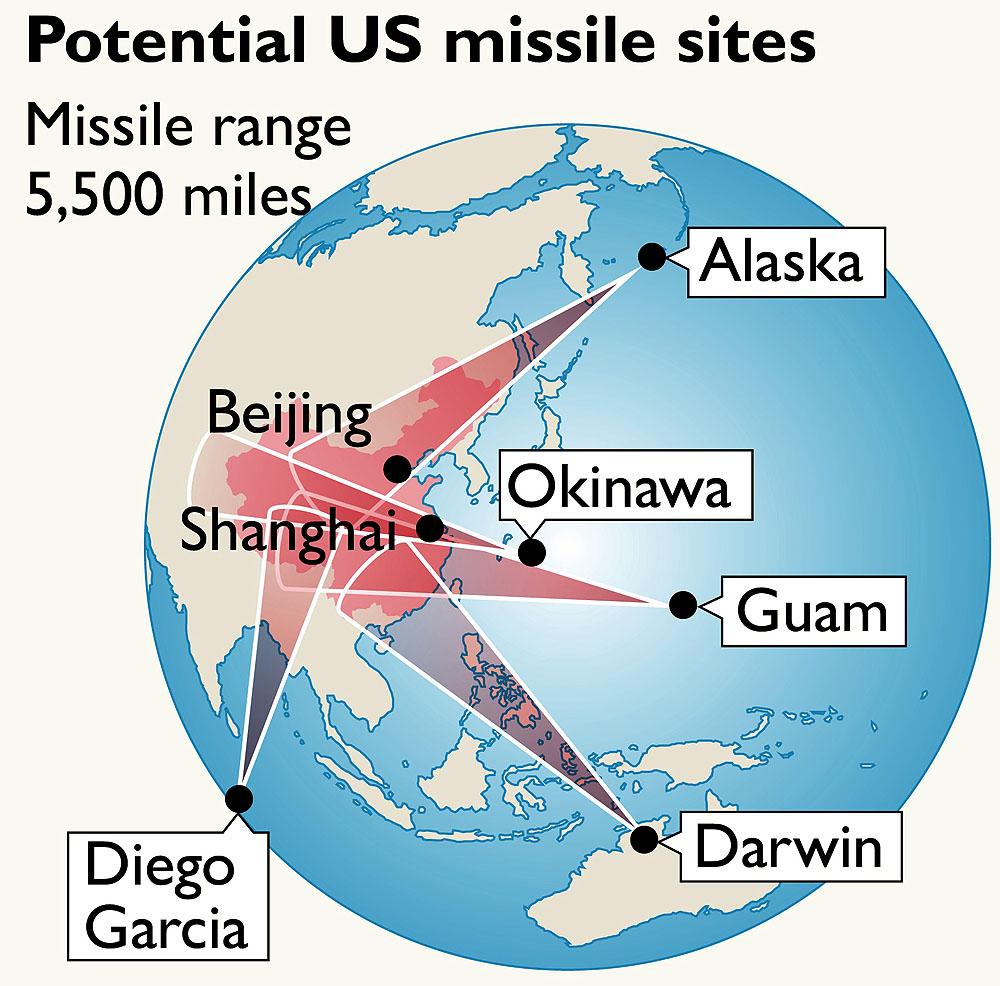
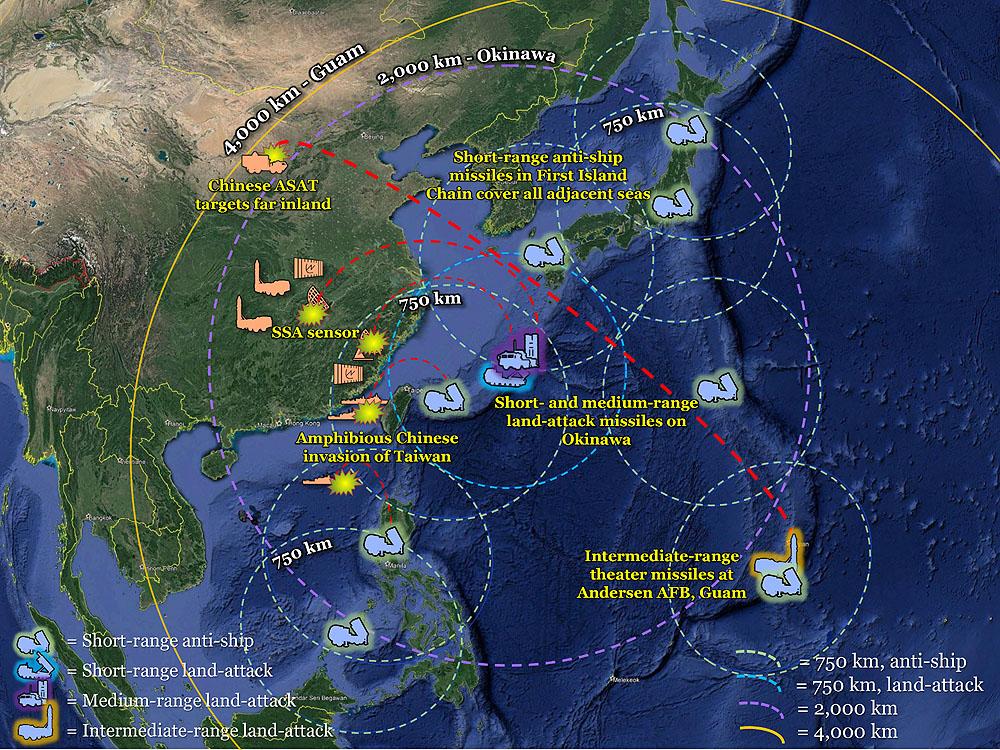
It turns out that land-based missile batteries are a lot cheaper than missile-carrying bombers and warships — which, of course, is precisely why China has built such a massive arsenal of them. In fact, offensive surface-to-surface missiles are much much cheaper than the missile defense interceptors required to shoot them down, because it’s a lot easier to build a weapon that can hit an airfield or even a warship moving 30 knots than it is to build one that can hit a missile moving hundreds of miles per hour.
CSBA estimates it would take two American THAAD interceptors, at $9.4 million apiece, to assure the shoot-down of a single Chinese DF-16, at $6 million a shot. (And that’s just the cost of the interceptors — not the system that helps make them effective.) At ratios like those, guess who runs out of ammo first? But by building land-based offensive missiles of its own, CSBA has long argued, the US can turn the tables on China and Russia and pursue a “cost imposition” strategy of its own.
Now, land-based weapons are also much less mobile than bombers and warships, which is why the US, with its far-flung interests, has preferred air- and seapower. But with China and Russia investing heavily in anti-aircraft and anti-ship firepower to blunt America’s edge (a strategy known as Anti-Access/Area Denial), ground-launched missiles are starting to look like an attractive back-up option. So the US Army is reentering the long-range missile business — what it calls strategic fires — for the first time since the INF Treaty banned such weapons in 1987.

Missiles of China
https://missilethreat.csis.org/country/china/

China is also developing a number of advanced capabilities such as maneuverable anti-ship ballistic missiles, MIRVs, and hypersonic glide vehicles. The combination of these trends degrade the survivability of foundational elements of American power projection like the aircraft carrier and forward air bases. China also has a relatively small but developing contingent of nuclear intercontinental ballistic missiles capable of striking the U.S. homeland, as well as a growing fleet of nuclear ballistic missile submarines.

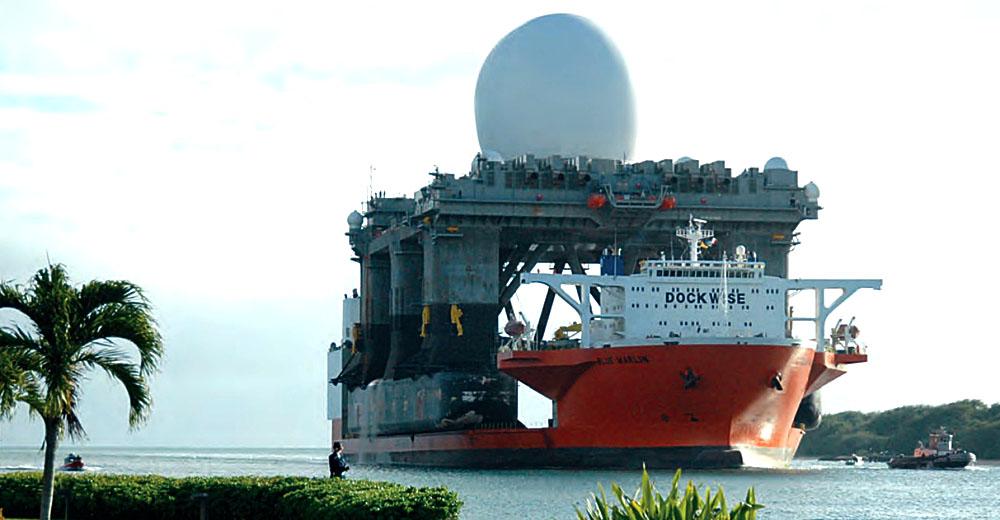
How China's Ballistic Missile And Nuclear Arsenal Is Ballooning According To The Pentagon
The Pentagon released the latest iteration of its report on the Chinese military and its capabilities, an updated version of which it is required to send to Congress every year, by law, on Sept. 2, 2020. It warned that the People's Liberation Army is continuing to make strides in a variety of important and advanced technologies, including, but certainly not limited to hypersonic weapons, artificial intelligence, cyber warfare, counter-space systems, air defenses, and the construction of large capital ships and advanced submarines. The review's discussion about ballistic missiles and nuclear capabilities, including a first-ever public estimate from the Department of Defense about the size of the Chinese nuclear arsenal, was especially significant.
The Pentagon estimates that China has added 10 new ICBMs to its arsenal since its 2019 report, as well as 10 more launchers, including silos and road-mobile transporter-erector-launchers, to fire them. This brings to the estimated size of the country's total operational IBCM force from 90 to 100.
The most notable addition are examples of the new DF-41 ICBM, also known to the U.S. intelligence community as the CSS-X-20, which reportedly has the ability to deploy Multiple Independently Targetable Reentry Vehicle warheads, or MIRVs, allowing a single missile to strike multiple targets.
The Pentagon says that these developments are, at least in part, a component of broader efforts to expand the size and scope of the People's Liberation Army's nuclear capabilities. The 2020 assessment includes, for the first time ever, an estimate of how many nuclear warheads China has – "in the low-200s" – with the possibility of that stockpile doubling in the coming years. As many as 200 warheads may be capable of threatening the United Staes within the next five years, according to the review.
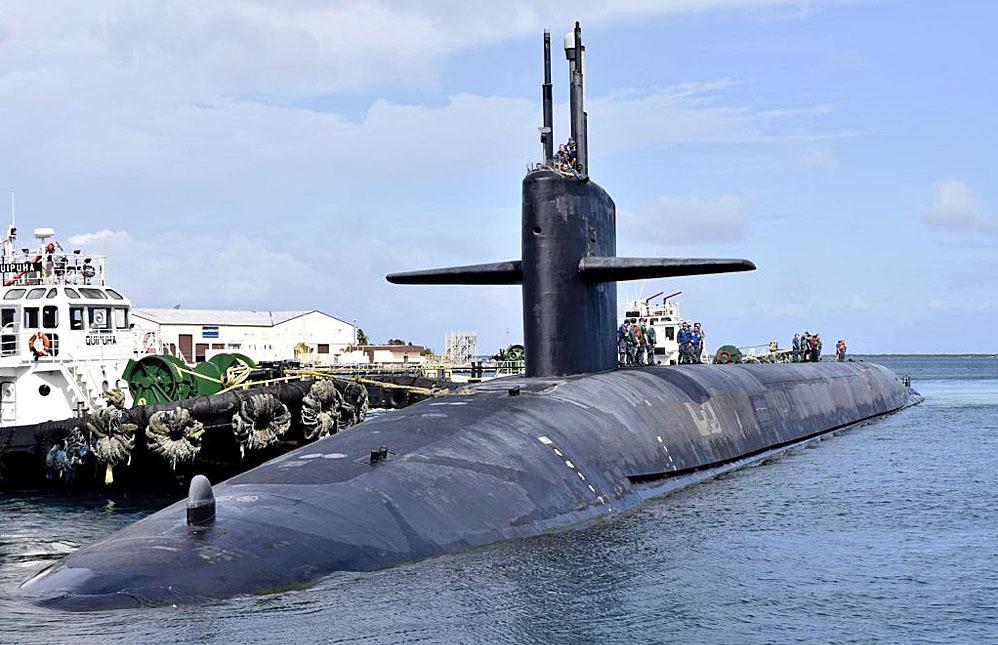
Navy Missile Submarine In Guam. Guam and Pearl Harbor Would Be China’s First Strike Targets
No, China Can't Beat America Outright in a War (Yet)
Beijing is much more powerful than it has ever been. However, it is not clear-cut that China could destroy enough of America's forces to win a war.
https://nationalinterest.org/blog/buzz/no-china-cant-beat-america-outright-war-yet-118066
For years, Chinese military planning assumed that any attack by the People’s Liberation Army on Taiwan or a disputed island would have to begin with a Pearl Harbor-style preemptive missile strike by China against U.S. forces in Japan and Guam. The PLA was so afraid of overwhelming American intervention that it genuinely believed it could not win unless the Americans were removed from the battlefield before the main campaign even began.
A preemptive strike was, needless to say, a highly risky proposition. If it worked, the PLA just might secure enough space and time to defeat defending troops, seize territory and position itself for a favorable post-war settlement.
But if China failed to disable American forces with a surprise attack, Beijing could find itself fighting a full-scale war on at least two fronts: against the country it was invading plus the full might of U.S. Pacific Command, fully mobilized and probably strongly backed by the rest of the world.
That was then. But after two decades of sustained military modernization, the Chinese military has fundamentally changed its strategy in just the last year or so. According to Fuell, recent writings by PLA officers indicate “a growing confidence within the PLA that they can more-readily withstand U.S. involvement.”
According to Adm. Cecil Haney, (7 August 2013) the former commander of Pacific Fleet subs, on any given day 17 boats are underway and eight are “forward-deployed,” meaning they are on station in a potential combat zone. To the Pacific Fleet, that pretty much means waters near China.
America has several submarine types. The numerous Los Angeles-class attack boats are Cold War stalwarts that are steadily being replaced by newer Virginia-class boats with improved stealth and sensors. The secretive Seawolfs, numbering just three—all of them in the Pacific—are big, fast and more heavily armed than other subs. The Ohio-class missile submarines are former ballistic missile boats each packing 154 cruise missile.
U.S. subs are, on average, bigger, faster, quieter and more powerful than the rest of the world’s subs. And there are more of them. The U.K. is building just seven new Astute attack boats. Russia aims to maintain around 12 modern attack subs. China is struggling to deploy a handful of rudimentary nuclear boats.

The Pentagon is eyeing a 500-ship Navy, documents reveal
Big Carriers are big expensive targets for missiles. Smaller robotic ships more expendable and can work 24/7 without manpower requirements.
Indeed, the fleet compositions presented in the inputs broadly reflect the concept of a lighter fleet more reliant on unmanned or lightly crewed vessels that Esper described to Defense News in a February 2020 interview.
The reports called for between 65 and 87 large unmanned surface vessels or optionally unmanned corvettes, which the Navy hopes will boost vertical launch system capacity to offset the loss over time of the Arleigh Burke-class destroyers and the four guided missile submarines.
Supporting documents to the forthcoming Future Navy Force Study reviewed by Defense News show the Navy moving towards a lighter force with many more ships but fewer aircraft carriers and large surface combatants. Instead, the fleet would include more small surface combatants, unmanned ships and submarines and an expanded logistics force.
Two groups commissioned by Secretary of Defense Mark Esper to design what a future Navy should look like suggested fleets of anywhere from 480 to 534 ships, when manned and unmanned platforms are accounted for — at least a 35 percent increase in fleet size from the current target of 355 manned ships by 2030.
The $40 billion U.S. missile defense system is at risk from these tech glitches
Once a missile is launched abroad, it is immediately detected by forward-base radar and satellite sensors. The moment it releases its warhead, ground-based radar systems start tracking and assessing it, and relay that information to the Ground-based Midcourse Defense, or GMD, which launches an interceptor missile (or multiple missiles). They contain the interceptor vehicle, a part of the missile that, once released, flies independently and targets the oncoming missile in an attempt to collide with it and destroy it.
The individual GMD system itself has a limited radius, and is ineffective if the threat missile is not within its effective range, which is why the U.S. has wanted to expand the GMD network across the globe. So far, GMD installations exist in Australia, Greenland, the U.K., Japan and in Southeast Asia. The Asian locations are particularly interesting, because they form the core of the anti-missile shield that would provide coverage for not only North Korea, but also China.
In theory, naval-, airborne- and ground-defense systems would provide a full spectrum of protection against various types of threats. In practice, however, the system leaves a lot to be desired. In a 60-page document titled “Shielded From Oversight,” the Union of Concerned Scientists (UCS) claims that even in “heavily scripted” test flights that were set up to succeed, GMD interceptors often didn’t collide with the mock targets. Only three of seven collisions were successful.
If these were real nuclear missiles, the consequences would be catastrophic. The malfunctions that led to the failures were all technical in nature. On one occasion, a circuit board malfunctioned. On another, a thruster failed. UCS says the problems stem from the Pentagon developing the system too quickly, sacrificing quality and effectiveness to meet deadlines imposed by governing officials.
When confronted with these shortcomings, Pentagon officials either outright denied them or claimed the system was sufficiently effective, which UCS called “both cynical and a disservice to the public.’’ The UCS went on to say: “If fielded equipment cannot be demonstrated to be effective and reliable, then the system should not be considered operational, and instead viewed as solely a research-and-development effort.”
So there you have it — over $40 billion was spent on its development, and the system still hasn’t shown that it’s capable of stopping incoming missiles in real-world conditions. As the first line of defense against total annihilation go, the system has done a poor job, since the test results have shown it’s nowhere near the effectiveness that Americans need to feel safe.