Compiled by Ewa Historian John Bond
Naval Ammunition Depot Waikele

May 1, 1964, the OAHU DETONATOR newsletter marked the 30th anniversary of the oldest ammunition depot in the world, the U. S. Naval Ammunition Depot, Oahu, Hawaii.
“As we pass the 30th year milestone at NAD, Oahu, let us glimpse into her past.”
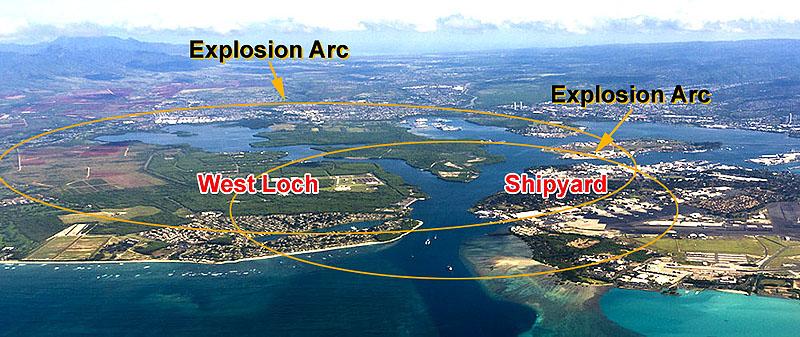
NAD Oahu consists of the head-quarters and two separate branches located in rural Oahu, The head- quarters which is located at Lualualei is the industrial center and main storage area and the branches are at West Loch (shipping and receiving) on Pearl Harbor and at Waikele (inland storage and special projects) which is north of West Loch. The headquarters at Lualualei is located approximately thirty-file miles from the city of Honolulu in a valley that is ringed by the Waianae range mountains, except toward the south-west where the valley opens to the Pacific Ocean. It occupies 8,062 acres of land.
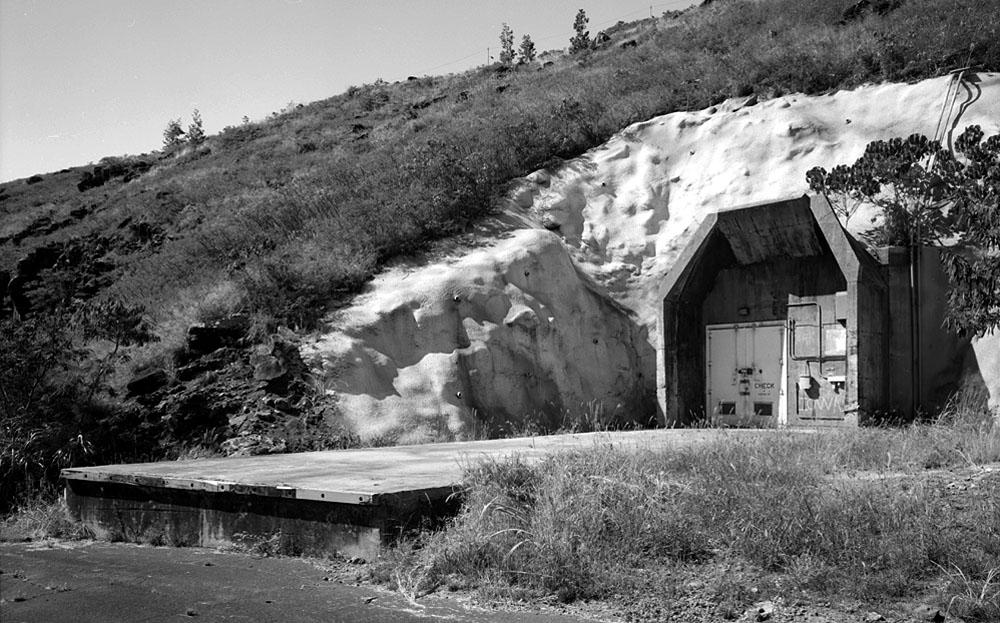
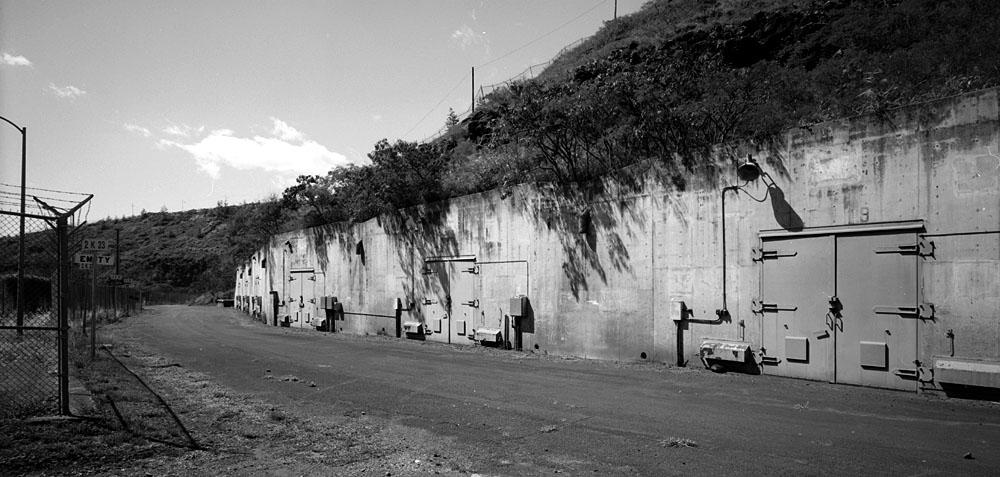
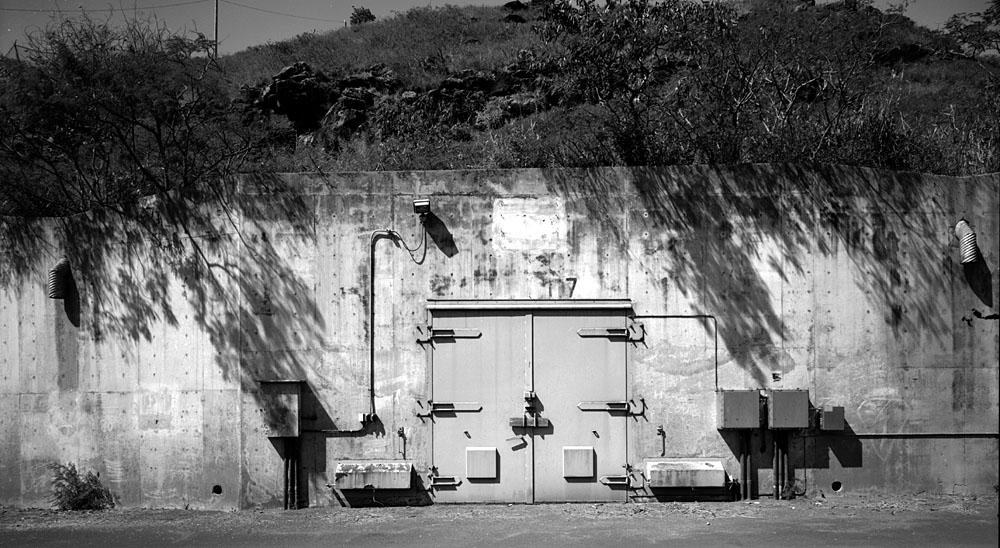
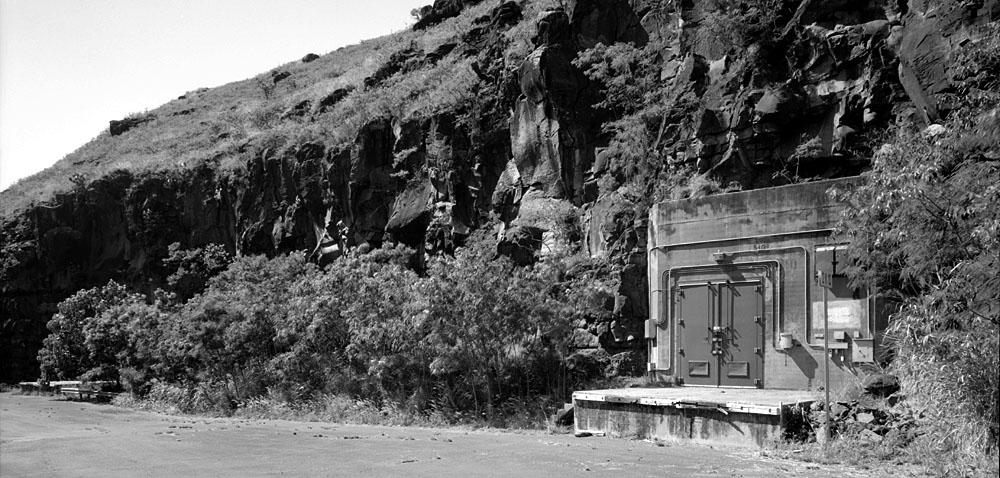
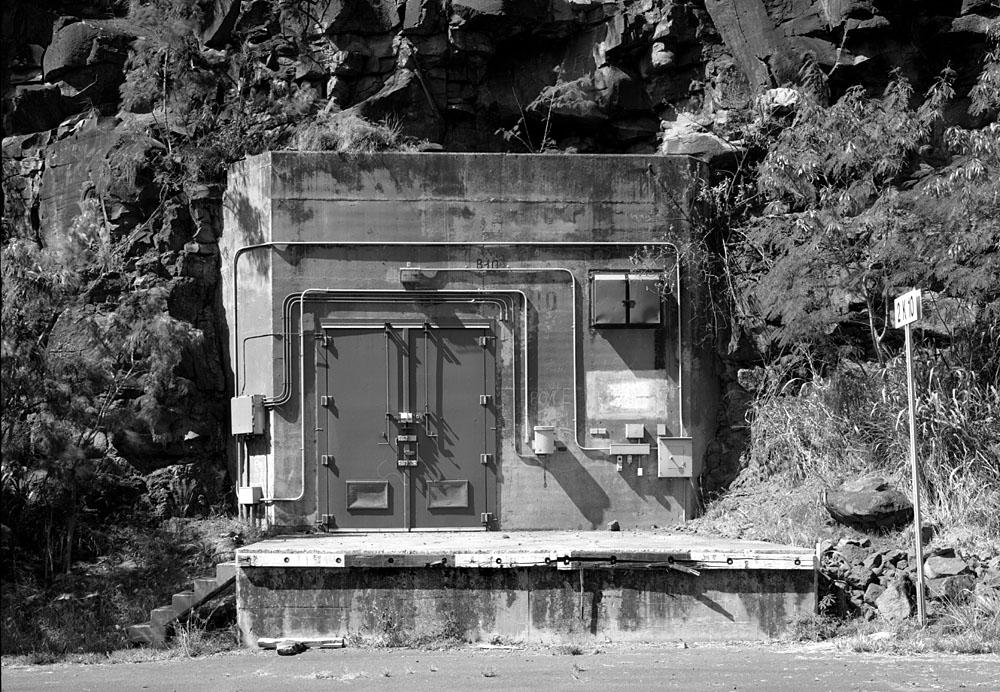
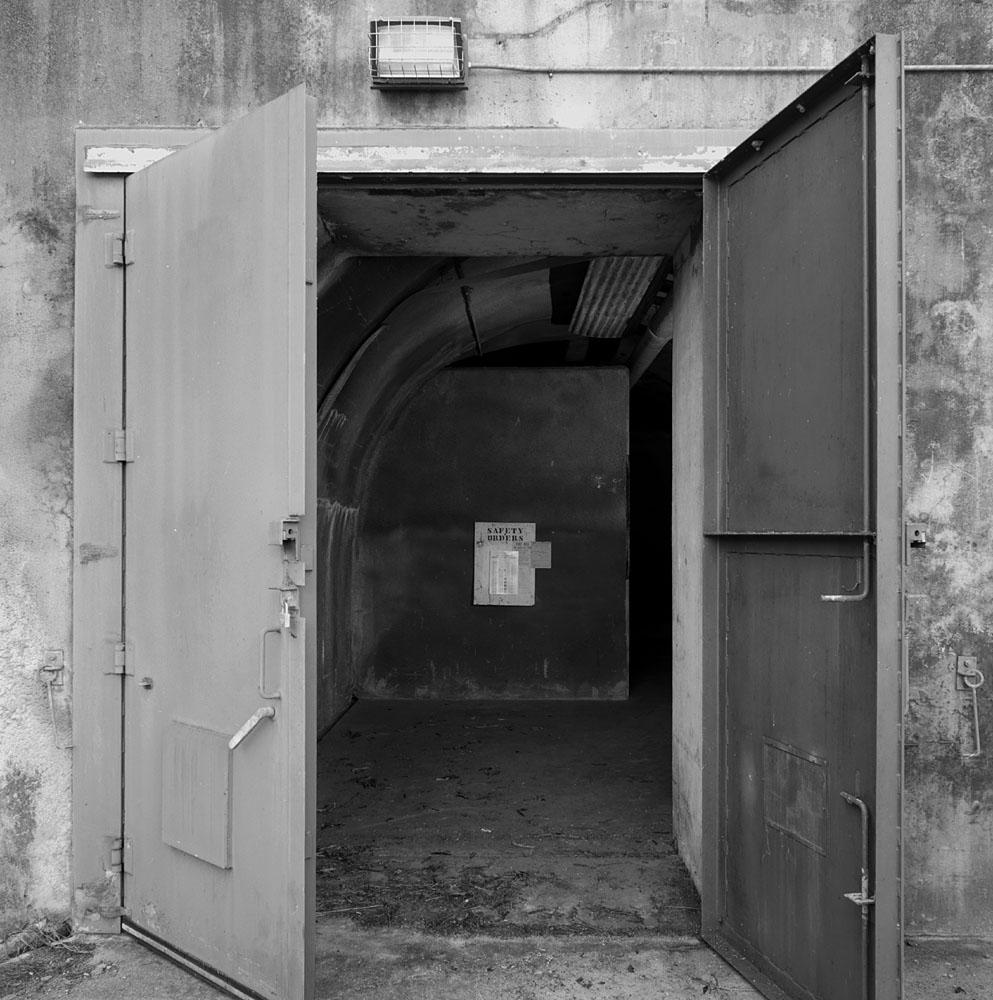
Waikele Branch which covers 520 acres is in and bordering on a juncture of three large gulches. Opening into the gulches are tunnel magazines. This branch is nineteen miles from Honolulu, eighteen miles from the headquarters and ten miles from West Loch. The 130 cave-like compartments were dug out of solid rock in the lower portion of Kipapa Gulch adjacent to Waikele Stream and used by the Navy through the 1970s. each of the 4,000 square foot caves. All 140 caves have a separate, secure entrance with iron doors, heavy gauge steel walls, concrete floors, and a loading dock.
Waikele Gulch
Waikele Gulch.--The pressing problem presented by the vast amount of explosives stored in the open among the hills and valleys of southern Oahu crystallized in mid-June 1942, when the Commander-in-Chief of the Pacific Fleet directed that "underground ammunition storage of major proportions" be constructed in a location that would "both be readily defended by, and accessible to, Pearl Harbor."
Steep-banked ravines made possible tunnel construction
so that no two entrances faced each other
A 350-acre site was selected where steep-banked ravines made possible tunnel construction in such a manner that no two entrances faced each other, and a railroad spur could be built to service the installation. Most of the tunnel roofs were concreted, and the floors were built of reinforced concrete. Concrete sidewalls were carried to a 7-foot height, mainly as gravity retaining walls. The loading platforms were of concrete.
Facilities included 120 tunnels, each 240 feet long, which required 9 miles of railroad, 10 miles of paved road, 9 miles of patrol road, four bridges, and housing and messing facilities for operating personnel. Work on this project, begun in September 1942, was completed in December 1943.
In April 1944 the SeaBees 125th Battalion arrived, followed in May by the 95th, to carry out additional construction, upon completion of which the depot was turned over to Construction Battalion Maintenance Unit CBMU 581.
Waikele Nuke Storage for the Regulus Missile
Regulus Missile
At least two years passed between the preparation of plans for the Regulus Missile complex at West Loch (January 1957) and its construction (completion ca. 1959). During this time it is not clear that the facilities were even funded as late as December 1958. That month a 14th Naval District prioritized list of construction projects describes it as a "Guided Missile Support Facility (Secret)" for fiscal year 1961 and indicates its estimated cost at $1,295,000.
During the time between the arrival of a Guided Missile Group (GMG 91) at Pearl Harbor in May 1957 and the completion of the Regulus I complex at West Loch it is most likely that some type of temporary support facility for the missiles was set up probably with the nuclear warheads and pits stored at concrete cave magazines in Kipapa Gulch and Waikele.
Guided Missile Unit 10, Pearl Harbor, 1964
Top Secret Naval Ammunition Depot Waikele Branch
http://the.honoluluadvertiser.com/article/2007/May/03/ln/FP705030358.html
There was no 'Halt,'" he said. "It was shoot to kill if somebody was entering."
He also remembers going out on "nuclear convoys" to West Loch in Pearl Harbor and the former Barbers Point Naval Air Station. A pickup truck with a flashing red light and siren would be in the lead and Marines guarded intersections.
1957 Missile Convoy poses for pictures in Waikele Naval Ammunition Depot
Waikele Gulch Bunkers stored munitions from 1940 to ’93
https://www.staradvertiser.com/2011/04/09/hawaii-news/bunkers-stored-munitions-from-1940-to-93/
For most of their history, the World War II-era storage bunkers in Waikele Gulch provided safekeeping for military munitions, including nuclear warheads.
In 2003, the Navy sold the 515-acre site to a private company that converted it into a successful storage facility that is now 94 percent occupied.
The sprawling Waikele complex was used for weapons storage from 1940 until 1993, according to the Navy. The bunkers housed as much as 56,000 tons of explosives, including nuclear warheads during the 1960s.
1957 flatbed truck loaded with weapons, Waikele Naval Ammunition Depot
Bulletin of the Atomic Scientists, March 1981
Hawaii: Life Under The Gun, Jim Albertini
Bulletin of the Atomic Scientists - Vol. 37, No. 3 - Magazine Page 50
CLANDESTINE PHOTOS OF NUCLEAR ASROC MUNITIONS LOADED AT WAIKELE AND TRANSPORTED TO WEST LOCH, LIKELY FOR LOADING AT THE AMMUNITION WHARF PIER

JAMES V. ALBERTINI. "Life Under the Gun," a "worst-case analysis" of the impact of our nuclear weapons ... Is Hawaii simply the advance symbol of what is happening to the rest of the so-called civilized world? ... Bulletin of the Atomic Scientists. March 1981.
Full Text Of March 1981 Article
A chapter from "Life Under the Gun" from our book "The Dark Side of Paradise --Hawaii in a Nuclear World" that has photos of nuclear weapons being loaded onto helicopters at Waikele for transport to West Loch. In one afternoon we photographed 18 ASROC nuclear weapons being loaded (6 on each of 3 helicopters) One loaded helicopter had engine trouble and mechanics had to be brought out to work on it before it took off loaded with nukes for West Loch.
Go To This Link:
https://pearl-harbor-blast-zone.blogspot.com/2020/10/honolulu-star-advertiser-column-public.html

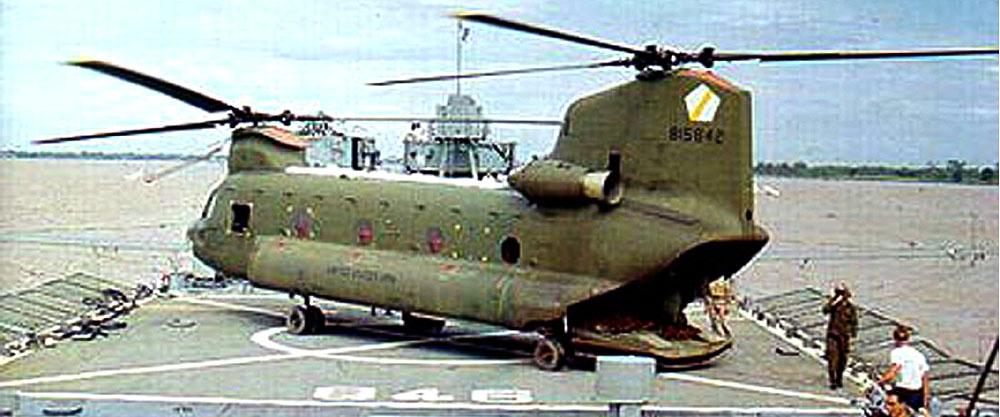
Interestingly in 1972 the United States Army stationed a CH-47 Chinook helicopter company, the 147th ASHC "Hill Climbers," at NAS Barbers Point for apparently hauling “special weapons” between Barbers Point ammunition bunkers, West Loch ammunition bunkers and Waikele ammunition bunkers. It was very unusual to base them at a Navy airfield as normally they would have gone to Wheeler Field to support Schofield 25th Division troops.
THE PROPHETS of OAK RIDGE
https://www.washingtonpost.com/sf/wp-style/2013/09/13/the-prophets-of-oak-ridge/
Last summer, in the dead of night, three peace activists penetrated the exterior of Y-12 in Tennessee, supposedly one of the most secure nuclear-weapons facilities in the United States. A drifter, an 82-year-old nun and a house painter. They face trial next week on charges that fall under the sabotage section of the U.S. criminal code.
And if they had been terrorists armed with explosives, intent on mass destruction? That nightmare scenario underlies the government’s response to the intrusion. This is the story of two competing worldviews, of conscience vs. court, of fantasy vs. reality, of history vs. the future.
A six-foot chain-link boundary fence bordered a gravel patrol road. Strung along the fence were yellow “No Trespassing” placards threatening a $100,000 fine and up to one year in prison.
The house painter gripped a pair of bolt cutters, fixed the jaws around a link and squeezed. He cut links in three lines, then opened the new flap. No alarm. No patrol cars. The nun went through first.
Trial of the Kings Bay Plowshares 7
https://kingsbayplowshares7.org/impact/
October 16, 2020, Patrick Challenges Judge, Judge Surprises Patrick, BRUNSWICK, GA—In a decision likely unexpected by both the defendants and prosecutors, a federal judge today passed down a significantly lower prison sentence to one of the Kings Bay Plowshares 7. Judge Lisa Godbey Wood sentenced Patrick O’Neill of Garner, NC, to 14 months in prison.
80 year-old Elizabeth McAlister was sentenced to time served and three years’ supervised probation and restitution for her part in the Kings Bay Plowshares disarmament action more than two years ago at the Trident submarine base in Georgia.
Countering the argument that lives were at risk by their action, Patrick said the seven activists were at the site for three hours and seen by guards who repeatedly passed by but kept going. When a guard finally approached Patrick and some of the others the Navy sergeant cracked a joke.
”Now you know you're all in a bit of trouble don't you?” he said.
Naval Ammunition Depot Waikele Branch
Marines Remember The Nukes
By William Cole Advertiser Military Writer
"This was flat-out nuclear warheads being assembled here, like you'd assemble regular artillery," said Mike Wise
"There was no 'Halt,'" he said. "It was shoot to kill if somebody was entering."
He also remembers going out on "nuclear convoys" to West Loch in Pearl Harbor and the former Barbers Point Naval Air Station. He remembers 8- to 10-foot nuclear bombs.
A pickup truck with a flashing red light and siren would be in the lead and Marines guarded intersections. Spani, said a 2 1/2-ton truck positioned ahead of one or more flatbeds with nuclear weapons had orders to run any cars off the road that didn't get out of the way.
WAIKELE — The guard towers are rusted now, and the big spotlights that swept the gulch below haven't worked for years.
But 40 years later, the memories are still sharp, the details still fresh.
Then again, duty in the 1960s at the once top secret Naval Ammunition Depot Waikele Branch, with its nuclear weapons storage and shoot-to-kill security, was hardly forgettable, veterans who served there said yesterday.
"This was flat-out nuclear warheads being assembled here, like you'd assemble regular artillery," said Mike Wise, who was 17 when he served on a Marine security detail at the Waikele branch in 1967.
In the late 1960s, both the Vietnam and Cold Wars were raging, and conventional and nuclear weapons storage and transfer was in full swing on the 520-acre base at the juncture of three deep gulches.
A total of 130 ammunition storage tunnels were bored 250 feet deep into cliff faces on both sides of Waikele and Kipapa streams.
Many today are used commercially for storage. Waikele Self Storage, which has 22 of the tunnels and about 400 customers, was contacted by six Marines and a sailor who served there. Yesterday, the company gave the men a tour and lunch.
It was the first time most had been allowed back inside the facility in four decades. The visit, which included a wine tasting at a tunnel rented by Diamond Head Cellars, was in sharp contrast to the deadly seriousness of years ago.
"Once you left this place, you left it. You weren't coming back for old home week," said Larry Ceres, 63, who came in from La Marque, Texas.
Wise, now 58 and living in Fontana, Calif., said Soviet trawlers off the coast tried to spy on the facility. According to the Navy, the ammo storage branch was used for weapons storage from 1940 until 1993.
"You didn't tell anybody you were here," said Wise, who was at Waikele from 1967 to 1969. "I would say 'I'm in the Marine Corps and I'm stationed above Waipahu,' and that was the end of it."
TIGHT SECURITY
Double rows of 8-foot-high fencing topped by barbed wire still ring the old base. Martin Spani, 64, who was a Marine sergeant of the guard from 1963 to 1966, remembers his orders on dealing with intruders.
"There was no 'Halt,'" he said. "It was shoot to kill if somebody was entering."
He also remembers going out on "nuclear convoys" to West Loch in Pearl Harbor and the former Barbers Point Naval Air Station.
A pickup truck with a flashing red light and siren would be in the lead and Marines guarded intersections.
Spani, who lives in Lynnwood, Wash., said a 2 1/2-ton truck positioned ahead of one or more flatbeds with nuclear weapons had orders to run any cars off the road that didn't get out of the way.
He remembers 8- to 10-foot nuclear bombs, and the veterans also recalled a maintenance building with overhead tracked hoists where weaponry was assembled. A guard tower still stands next to the building.
Only some of the Marines, who provided security, were allowed down in the valley, or "down in the hole," as it was called. Barracks, housing for dependents and a football field were atop the bluff near the current entrance off Pakela Street.
Yesterday's tour let them see more of the facility than they ever had before, but still left a lot of questions. Among them was speculation as to what was stored behind a series of Mosler Safe bank-vaultlike doors. Rows of 3-foot-deep metal bins lined the wall inside. Some thought the rooms were for nuclear detonators, while Spani speculated they were used to store cryptological information.
CHOKED IN OVERGROWTH
According to Waikele Self Storage, the headquarters of what was U.S. Naval Ammunition Depot, O'ahu, was at Lualualei on the Wai'anae Coast. The ammunition depot and Navy communications center occupies 8,195 acres and has 255 above-ground magazines.
In 1929, the Navy purchased 8,184 acres for Lualualei from the McCandless Estate, which had been using the area as a cattle ranch. The West Loch branch was created later, and the land occupied by the Waikele branch was purchased from the Army.
Some reports say the Waikele ammo storage facility got its start in the early 1940s, but some of the veterans who visited yesterday believe it might have been in the late 1930s.
The Waikele branch, which still has a three-story barracks and mess hall, sat vacant for more than a decade. Weeds overtook bridges and roads, and goats and pigs roamed about. A separate Army section of tunnels abutting Kamehameha Highway remains choked in overgrowth.
As part of a Navy effort to re-develop Ford Island, the service used special legislation passed in 1999 allowing it to sell or lease outlying properties on O'ahu in exchange for $84 million in infrastructure improvements by Fluor Hawai'i LLC.
One of the parcels Fluor ended up with was the Waikele naval magazine. The grounds and tunnels are now used for storage. Eight tunnels are used by fireworks vendors. The Tony Auto Group has cars bumper to bumper on 1 1/2 acres. Security guards watch over who comes and goes.
Peter Cannon, of Waikele Self Storage, has renovated 15 of the tunnels, with more on the way. The Marine veterans saw the company's Web site and contacted him about the mini reunion. Cannon was happy to oblige and yesterday gave the group and their spouses a bus tour of the Waikele complex and provided lunch.
"For us, it's a great wealth of knowledge and to be able to give back," Cannon said.
REMEMBERING FALLEN
The tour took the Marines past rickety and rusty Tower 6 on a bluff, which several of them promptly climbed. A 21-year-old Marine had positioned his M-14 rifle under his chin and killed himself in the tower in 1966 over a relationship that went bad.
Spani, 64, who found the Marine, was somewhat surprised he could still make it pretty quickly up the ladder.
Later, the group remembered the dead Marine, two who were killed in vehicle accidents at Waikele, and two more who died in Vietnam during a flag-raising and playing of taps.
Fred Grimm, 58, from Jefferson, Ohio, said the chance to get together with fellow veterans at Waikele was "tremendous."
"What a valuable thing," he said.
Added Wise: "Some of it's a little bit of closure for some of us."
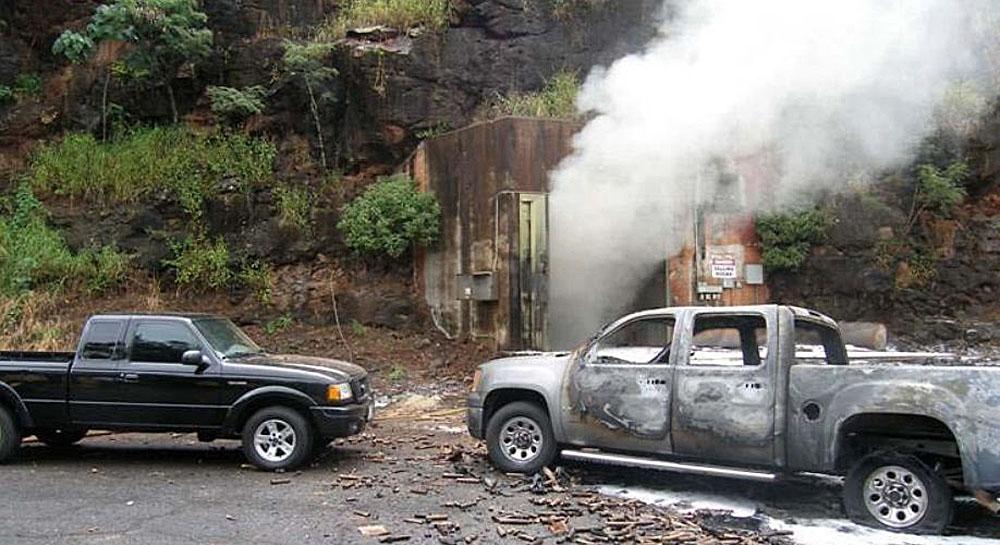
4 dead, 2 hurt in explosion at Waikele fireworks storage unit
Fire investigators in Honolulu were unable to determine the cause of an explosion April 8 at Waikele Self Storage, which killed five men.
Seelig said the point of origin was somewhere in the front of the bunker that held confiscated illegal fireworks. But investigators could not pinpoint exactly where the fire started or what the workers were doing just before the explosion.
https://www.staradvertiser.com/2011/04/08/breaking-news/4-dead-2-hurt-in-explosion-at-waikele-fireworks-storage-unit/
Manager accepts plea deal in fatal Waikele bunker explosion case
https://www.staradvertiser.com/2017/04/10/breaking-news/manager-accepts-plea-deal-in-fatal-waikele-bunker-explosion-case/
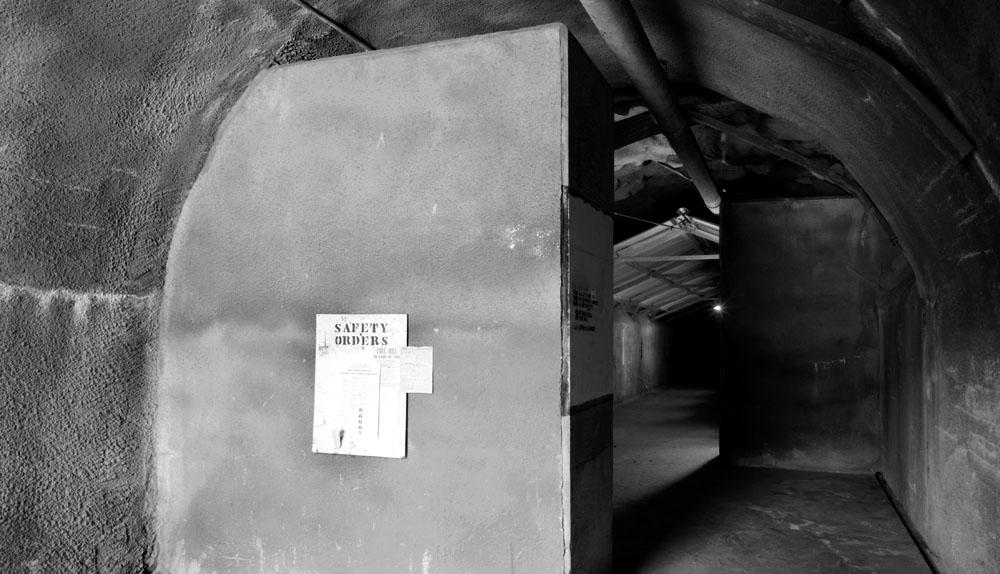
Below: HABS HAER Edited Photos By Ewa Historian John Bond
These photos were taken as an historic record after the facility was closed